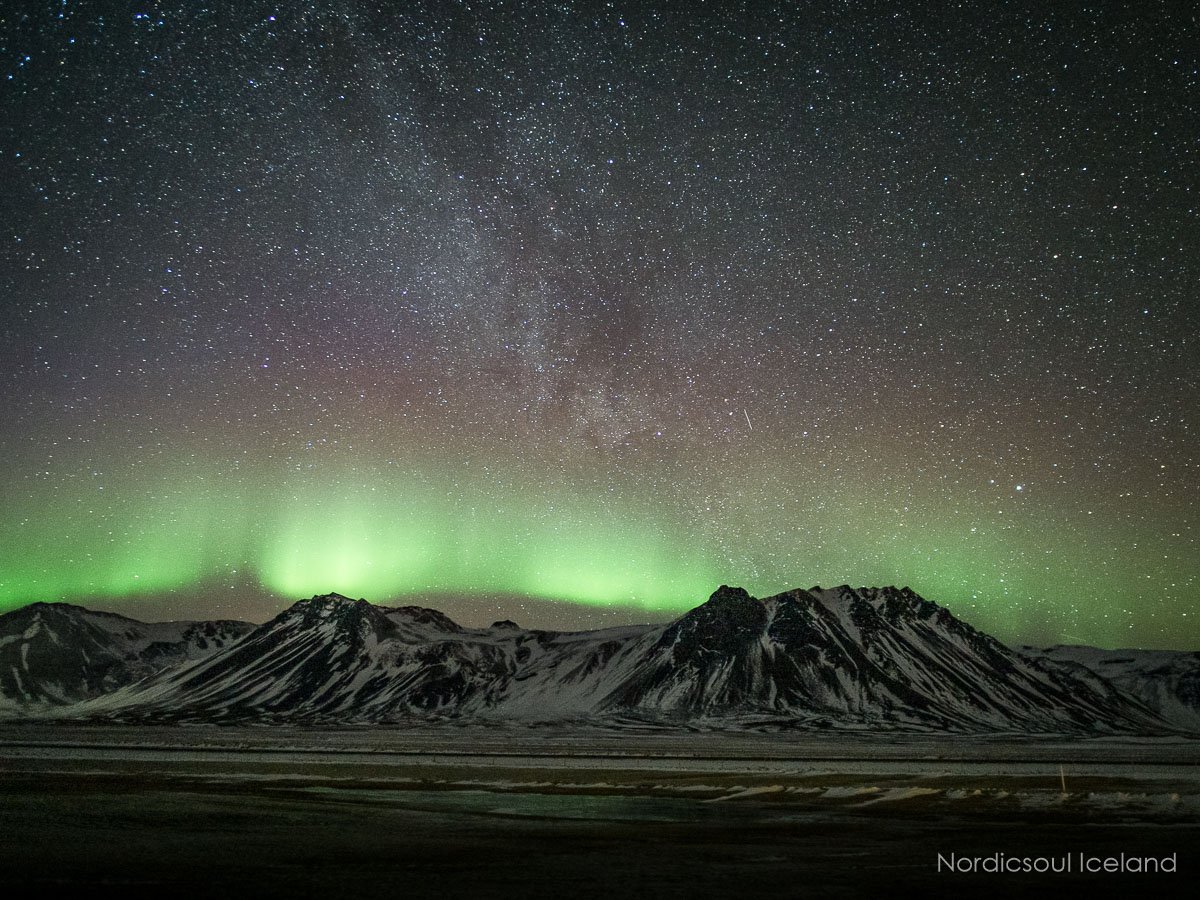
Growing up in Iceland, I’ve been lucky enough to have seen the Northern Lights multiple times throughout my life. Sometimes, they are just a faint sliver of green gliding across the evening sky. Other times, they are dazzling, illuminating the dark night with bright neon colors.
Even though I grew up with these celestial displays, I am always in awe of them. No matter how weak they are, I stop to gaze up at the sky and alert anyone in my vicinity who’s not staring into the air of their presence.
So, I thought I’d share my local knowledge of the Northern Lights, including when and where to see them and tips on maximizing your Northern Lights experience.
What are the Northern Lights?
You might not need to know what the Northern Lights are to appreciate their beauty, but knowing how they’re formed could help you in your hunt for them. So, here’s the scientific explanation.
These dancing green lights are also known as Aurora Borealis and are a result of solar flares. When charged particles from the sun, mainly electrons and protons, collide with gasses in Earth’s atmosphere, they create photons, the fundamental particles of light. These collisions — known as solar storms— occur high above the Earth, particularly in the polar regions within the Earth’s magnetic field.
It is this cosmic dance that creates the mesmerizing hues of the Auroras, with colors ranging from green and red (from oxygen) to blue and purple (from nitrogen).
To predict and understand the intensity and visibility of the Auroras, scientists use a measurement known as the KP-Index. With a range between 0 and 9, the index measures fluctuations in the Earth’s magnetic field. The higher the score on the KP-Index, the higher your chances of seeing the Auroras are.
I could go into more detail about charged particles, photons, and gases, but I doubt the science of Auroras is why you clicked on this article, so let’s keep it simple and move on to more practical elements.
What Affects Visibility?
Sure, seeing the Northern Lights can be as simple as looking up at the sky. But you don’t want to crane your neck for hours on end when there’s little chance the Auroras will show up. So, to avoid any neck injuries, let’s look at the three main factors that affect the visibility of the Northern Lights.
- The strength of the Auroras themselves
- Darkness
- Cloud coverage
Strength: As we went over in the chapter above, the strength of the Northern Lights is determined by the particles released by the sun. When solar winds are strong, the chances of seeing the lights increase. But if solar activity has been low, you might as well go to bed early and try your luck another night.
Darkness: The Auroras occur high in the Earth’s atmosphere, and their light is not strong enough to compete with the sun’s brightness or the glow of artificial light. A black sky provides an excellent backdrop for the colorful hues of the Auroras, enhancing their visibility. That’s why you can’t see them in the day or the summer in Iceland, because the ever-glowing Midnight Sun lights up the night sky.
Cloud coverage: Clouds act as a barrier between us and the Auroras and block the light emitted by the Northern Lights. Even thin or high-altitude clouds can diffuse the light, making the Auroras less visible or completely obscuring them. They can also reflect artificial light from the ground, such as streetlights, which can create a brightened sky and reduce the contrast we need to see the Auroras clearly.
Tips for Hunting the Northern Lights

When you’ve lived in Iceland for a while (or, in my case, your whole life), you don’t find the need to go Northern Lights Hunting. It’s guaranteed that they’ll show up a few times during the winter months, so why put the effort into searching for them?
However, I have friends and family members who don’t live here and sometimes come and visit me. They usually only stay for a short while, so I’ve had to learn a few things about actually going out to find the Northern Lights.
Check the Skies
This seems like such obvious advice, but many people fail to follow it. Look up!
As I mentioned before, darkness is one of the main factors you need to see the Northern Lights. This is why the main Northern Lights tip is usually to get away from the bright city lights and into the dark countryside.
However, sometimes, these dancing lights are strong enough to break through the artificial lights of the city. I’ve walked on Laugavegur Shopping Street — arguably one of the brightest streets in Reykjavík — and seen the green lights dance above me. Many people think you can’t see the Northern Lights in the city, so they miss them. That’s why my number one tip for seeing the Northern Lights is to simply look up at night, no matter where you are.
Use Apps and Websites to Check the Forecast
Growing up in Iceland, I never thought much about the conditions that produce the Northern Lights. They were just colorful lights that showed up once in a while. Hunting for the Northern Lights was practically unheard of since this was Mother Nature, and she is unpredictable.
But now we have apps and websites that track weather patterns and fluctuations in the Earth’s magnetic field, allowing us to calculate the chances of the lights showing up and finding the best spots to see them.
To effectively hunt for the Northern Lights, you’ll need the right tools that offer real-time predictions, KP index updates, and cloud coverage information. Here are some essential resources and additional benefits they offer:
- Icelandic Met Office Website (vedur.is):
- General weather forecasts
- Current outside temperatures
- AuroraForecast.is:
- Predicted maximum times for the KP index
- Apps like My Aurora Forecast & Alerts:
- Long-term KP forecast
- Real-time aurora alerts
Using these tools will enhance your chances of witnessing the spectacular Northern Lights by keeping you informed and prepared.
Use the Northern Lights Wake-Up Services
The hardest part about Northern Lights hunting is undoubtedly staying up so late. The forecast might say there is a chance they’ll show up, but it’s getting pretty late, there are no signs of the lights, and you’re tired after a day of traveling. Should you keep going or get some precious Zs so you’ll be refreshed for tomorrow’s activities?
Thankfully, there’s a solution to this: a Northern Lights Wake-Up Call. Many hotels in the countryside offer this service of calling you in the middle of the night if the lights show up.
While the Northern Lights Wake-Up Call is a fantastic service, it shouldn’t be your only method for experiencing the Northern Lights. Think of it as an extra layer of support. For the best chance of seeing the auroras, we recommend actively going out and hunting for them. Combining both approaches will maximize your chances of witnessing this incredible natural phenomenon.
Book a Northern Lights Tour
I used to try to save a few bucks everywhere I could by doing things myself. This led to terrible hair dye jobs, staying at questionable hotels while abroad, and lots of time wasted. Now, I’ve realized that sometimes it’s just better to pay for convenience and get the results I actually want, saving time and sometimes money as well.
I think booking a Northern Lights Tour would fall into a convenient category. Sure, you can drive into the dark countryside, follow the apps for the optimal time, and find a place away from bright city lights with no cloud cover. But you can also just take it easy and let a professional do all that for you.
On a Northern Lights Tour, a professional guide will pay attention to the weather forecast and handle driving on Iceland’s wintry roads. They know the country well and will know the best spots to see the dancing auroras. All you have to do is sit back and relax, perhaps take a nap in the car on the way.
If the guides think your chances of seeing the Northern Lights are too low, they’ll reschedule the tour. This means you don’t have to spend a sleepless night looking for the lights that probably won’t appear. And if the tour goes ahead and you don’t see the lights, you can go on another excursion at a later night for free. This is why you should book a Northern Lights Tour at the beginning of your vacation.
Book Longer Stays & Explore Iceland
Many people plan a weekend trip to Iceland just to see the Northern Lights, but I find that quite risky. The Northern Lights are a natural phenomenon, unpredictable and dependent on Mother Nature’s whims. Booking such a short trip with the sole aim of witnessing the Auroras might lead to disappointment if the conditions aren’t right.
One thing you can do to maximize your chances of seeing the Northern Lights is to book a longer stay. More nights mean more chances of seeing the lights dance across the evening sky. If it’s cloudy the whole weekend, you’d still have the rest of the week to witness this nighttime display.
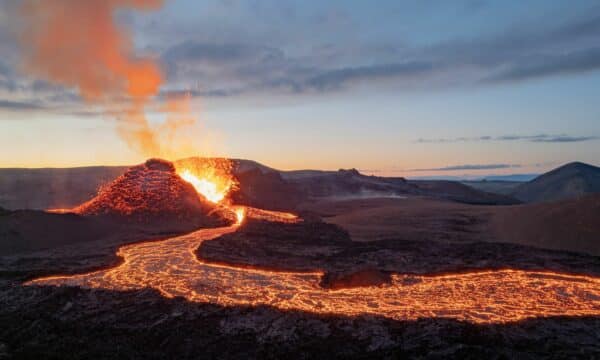
Also, don’t let your entire trip revolve around the Auroras. While seeing the Northern Lights tops many people’s bucket lists, Iceland has so much more to offer. During your stay, immerse yourself in the stunning nature, like gorgeous waterfalls, black-sand beaches, and glacier lagoons. You can engage in unique activities like snowmobiling on a glacier, soaking in a hot spring, and visiting a volcano! Explore the beauty of Iceland by day and hunt for the Northern Lights by night.
Additional Safety Tips
The magical experience of seeing the Auroras is unforgettable, but Iceland’s winter conditions can be challenging. So, if you want to have a good time, keep these tips in mind:
Firstly, check any weather alerts. Iceland’s weather, especially in winter, can be harsh and change rapidly. Stay informed of any weather warnings to ensure you don’t venture out into dangerous conditions. Checking road conditions is equally important. Winter brings snow and ice, so roads can become treacherous quickly. Visit road.is to monitor updates regularly and always drive cautiously.
Follow the principle of leaving no trace so we can preserve Iceland’s natural beauty. This means packing out all trash, staying on designated paths, and minimizing your impact on the environment. Additionally, always respect private property. Make sure you are on public land or have obtained permission if you are on private property. This respect helps maintain good relationships with local landowners and ensures you can enjoy your Aurora hunt without issues.
Finally, remember that Aurora’s activity is unpredictable. Be prepared to wait a long time, perhaps for a few hours. Also, be flexible. Weather conditions can change, so be open to moving to different locations if needed. Staying adaptable increases your chances of experiencing the Northern Lights in all their glory while staying safe and respectful of the environment and local regulations.
What to Wear on a Northern Lights Hunt?
Dressing appropriately for activities is the key to having a good time in Iceland. You don’t want to go through the trouble of downloading an Aurora app, checking cloud coverage and road conditions, and drinking gallons of caffeine to keep yourself awake, only to have the experience ruined by the freezing cold.
Preparing for a Northern Lights hunt means dressing for the cold, unpredictable Icelandic weather. The trick to staying comfortable is layering, which allows you to adjust your clothing to stay comfortable.
Here’s a guide on what to wear to ensure you stay warm and dry during your Aurora adventure:
- Base Layer:
- Thermal Underwear: Choose moisture-wicking thermal tops and bottoms to keep you dry and warm.
- Socks: Wear insulated, moisture-wicking socks. Wool is a great option.
- Mid Layer:
- Fleece Jacket or Wool Sweater: These materials provide excellent insulation.
- Insulated Pants: Consider fleece-lined or soft-shell pants for added warmth.
- Outer Layer:
- Waterproof and Windproof Jacket: A good-quality, insulated winter jacket is essential. Look for one with a hood and a high collar.
- Waterproof and Windproof Pants: Protect your legs from snow and wind with durable, insulated pants.
- Accessories:
- Hat
- Gloves or Mittens
- Scarf or Neck Gaiter
- Boots: Insulated, waterproof boots with good traction are crucial for staying warm and preventing slips on icy surfaces.
- Optional Extras:
- Hand Warmers: These can provide additional warmth when needed.
- Headlamp or Flashlight: Good for navigating in the dark.
- Thermal Flask: Filled with a hot drink to keep you warm.
Luckily, most of these items will also be useful in your exploration of Iceland’s other natural wonders, such as glaciers, volcanoes, and ice caves.
Best Months to See the Northern Lights
To see the Northern Lights, you need darkness, and Iceland has very little of that during the summer months, thanks to the Midnight Sun. So, if you want to witness the Auroras, you must visit in the winter. But which months are best?
Unfortunately, the darkest months also have the worst weather and the most cloud coverage. Late January and early February provide plenty of darkness, but this time is also known for frequent storms, making it difficult to go out and hunt for the lights.
Personally, I recommend visiting in September or October. The weather should still be mild, but there’s plenty of darkness to see the Auroras. Plus, there are fewer crowds during these months.
But you should also take into consideration what else you want to see and do in Iceland. For example, the popular Blue Ice Caves in Vatnajökull are open from October to March. The renowned Iceland Airwaves Music Festival takes place in early November, and Christmas and New Year’s are always a blast here in Iceland.
Below is a chart showing hours of darkness, weather considerations, chances of Auroras, and how often each month has clear skies. Of course, this is all subject to change depending on Mother Nature’s mood.
|
Month |
Likelihood of Aurora |
Hours of Darkness |
Weather Consideration |
Clear Skies |
|
September |
High |
Long |
Mild |
35% |
|
October |
High |
Longer |
Cooling |
35% |
|
November |
High |
Longest |
Cold, possible snow |
31% |
|
December |
High |
Longest |
Cold, snow |
27% |
|
January |
High |
Long |
Very cold, snow, winds |
23% |
|
February |
High |
Long |
Cold, snow, winds |
24% |
|
March |
High |
Long |
Less cold, possible snow |
29% |
|
April |
Variable |
Shortening |
Mild, less snow |
37% |
Best Places to See the Aurora Borealis in Iceland
I’ll be honest with you: when it comes to chasing the Northern Lights, you don’t need to stress about finding a specific spot. Once you’ve left the bright city lights behind, any dark area with clear skies will give you a great view.
One location might be perfect one night but not the next due to changing cloud coverage. So, racing to a place from a “Best Northern Lights Spots” article won’t help if the forecast isn’t favorable. If your main goal is simply to see the lights, anywhere away from city lights will do.
However, for photographers or those wanting to witness the lights in a breathtaking setting, I’ve included a list of beautiful, dark places. The best way to use this list is to check which spot has the least cloud coverage on the night you plan to go Aurora hunting.
Thingvellir National Park
Þingvellir National Park — one part of the famous Golden Circle — is a fantastic spot for Northern Lights hunting. This UNESCO World Heritage site offers expansive, dark skies free from city light pollution. The park’s unique geological formations, including the rift valley and volcanic landscapes, provide a dramatic backdrop for the dancing lights.
Plus, it’s easily accessible from Reykjavík, making it a convenient choice for Aurora chasers staying in the city.
Skógafoss Waterfall

Skógafoss Waterfall is one of Iceland’s most iconic waterfalls. Photographing the Aurora Borealis illuminating the sky above this mighty cascade will undoubtedly yield some amazing pics.
With its relatively easy access and open surroundings, Skógafoss offers unobstructed views of the sky, making it a top choice for photographers and nature lovers alike.
Jökulsárlón Glacier Lagoon
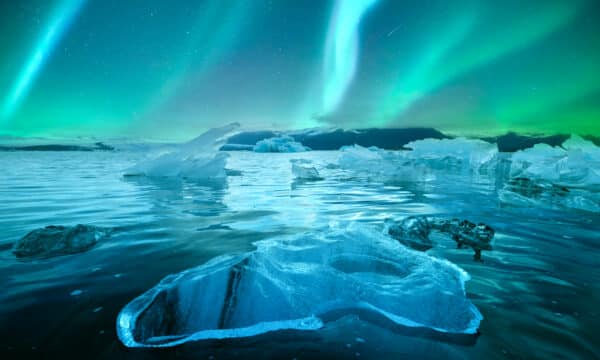
Jökulsárlón Glacier Lagoon is a magical place to experience the Northern Lights. The lagoon’s serene waters, dotted with floating icebergs, reflect the colors of the Aurora, creating a stunning mirror effect.
Located far from urban lights in Vatnajökull National Park, this spot offers crystal-clear views of the night sky.
Mt. Kirkjufell
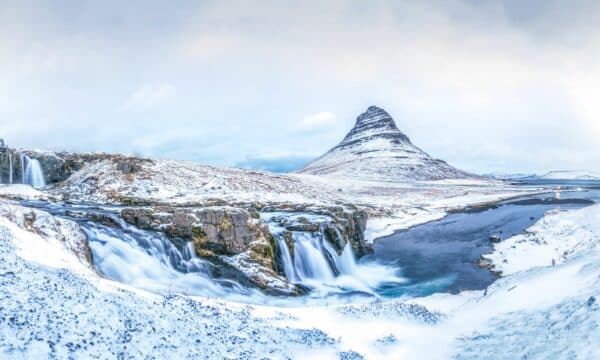
Mt. Kirkjufell, often called the “most photographed mountain in Iceland,” provides a striking silhouette against the Northern Lights. Its distinct shape and the nearby waterfall create a picturesque scene that’s perfect for capturing the Aurora.
Situated on the Snæfellsnes Peninsula, Kirkjufell is far from city lights, ensuring dark skies and excellent visibility for Northern Lights displays.
Hraunfossar Waterfalls

Hraunfossar Waterfalls are a fantastic spot for Northern Lights hunting. On average, the Northern Lights appear here three times a week during the winter months. The proximity to Langjökull, Iceland’s second-largest glacier, often ensures clear skies, enhancing your chances of a successful sighting.
Away from light pollution, this remote location offers clear, unobstructed views of the night sky, making it a prime destination for a memorable Northern Lights experience.
How to Photograph the Northern Lights (with a Phone)
Seeing the beautiful Northern Lights is one thing, but capturing them on film requires some preparation and the right equipment and technique. Whether you’re using a professional camera or your phone, you should be able to snap some impressive shots with these techniques:
Northern Lights with a Camera
Use the Right Equipment:
- Camera: A DSLR or mirrorless camera with manual settings is ideal.
- Lens: A wide-angle lens with a large aperture (f/2.8 or lower) lets in more light.
- Tripod: Essential for keeping your camera steady during long exposures.
- Remote Shutter Release: Prevents camera shake when taking photos.
Camera Settings:
- Aperture: Set your lens to its widest aperture (e.g., f/2.8) to capture as much light as possible.
- ISO: Start with an ISO of 800-1600. Adjust as needed depending on the light conditions.
- Shutter Speed: Use a shutter speed between 5-25 seconds. Experiment to find the best exposure.
- Focus: Manually focus on a distant light source or set your lens to infinity. Test shots are key here.
Northern Lights with a Phone
Manual Settings: If your phone allows, switch to manual mode. Adjust the ISO, shutter speed, and focus manually for better results.
- ISO: Set it between 800 and 1600 to capture more light.
- Shutter Speed: Opt for a slower shutter speed (4-10 seconds) to allow more light in.
- Focus: Set the focus to infinity for sharp images of the sky.
Night Mode: If your phone has a night mode, use it. This mode is designed for low-light photography and can help enhance your shots.
Use a Remote Shutter: A remote shutter or a self-timer minimizes camera shake, leading to clearer photos.
App Assistance: Download a dedicated night photography app.
Keep Your Phone Warm: Cold temperatures can drain your battery quickly. Keep your phone close to your body when not in use and bring a portable charger.
Aurora Borealis Photography Tips
Use a Tripod: Stability is key. A tripod helps keep your phone steady, reducing blur in low-light conditions.
Composition:
- Foreground Interest: Include an interesting foreground like mountains, trees, or water to add depth and context to your photos.
- Rule of Thirds: Position the horizon in the lower third of the frame to showcase more of the sky and the lights.
Experiment and Be Patient:
- Trial and Error: Don’t be afraid to adjust your settings and try different compositions.
- Wait and Watch: Aurora activity can be unpredictable. Be prepared to wait for a few hours and stay flexible to move to different locations if necessary.
In essence, photographing the Northern Lights is a mix of art and science. With the right gear, settings, and a bit of patience, you’ll be able to capture stunning images of this natural wonder. Happy shooting!
Iceland Northern Lights FAQ
In this article, I have tried to cover everything you need to know about the Northern Lights in Iceland. But once it was written, I realized there were a few unanswered questions. So, I’ll end this Aurora article with some frequently asked questions.
If you have any more questions, feel free to ask them in the comments, and I’ll update the article with the answer.
No, the Northern Lights are not visible every night in Iceland. Visibility depends on solar activity, clear skies, and darkness, which means they are typically seen from September to April.
Seeing the Northern Lights in Iceland is not extremely rare. On average, they are visible 3-4 times a week during the winter months, but this depends on weather conditions and solar activity.
The best time to see the Northern Lights is between 10 PM and 2 AM, when the sky is darkest.
Yes! I’ve even written an article about it. Check it out here.